The stove is in many ways the most important part of our kitchens — but switching to a new one isn’t always as simple as it seems.
Swapping out one range for another one of the same type and size is usually pretty straightforward. But the moment you want something different — a bigger footprint, switching from electric to induction, or from a standard range to a cooktop and wall-oven combo — you might be opening yourself up to electrical or cabinetry work that you didn’t plan for.
Just like when you’re buying a new fridge, a little research, planning, and measuring in advance will save you a lot of time and headache down the road. So let’s talk about the different types of kitchen ranges and what you should know before you make a purchase.
Stoves and ranges
Stove vs. range - what’s the difference?
Most of the time, I hear “stove” and “range” used interchangeably — and honestly for our purposes it doesn’t really matter. But to set some technical definitions for when you’re doing your research or talking to the appliance salesperson:
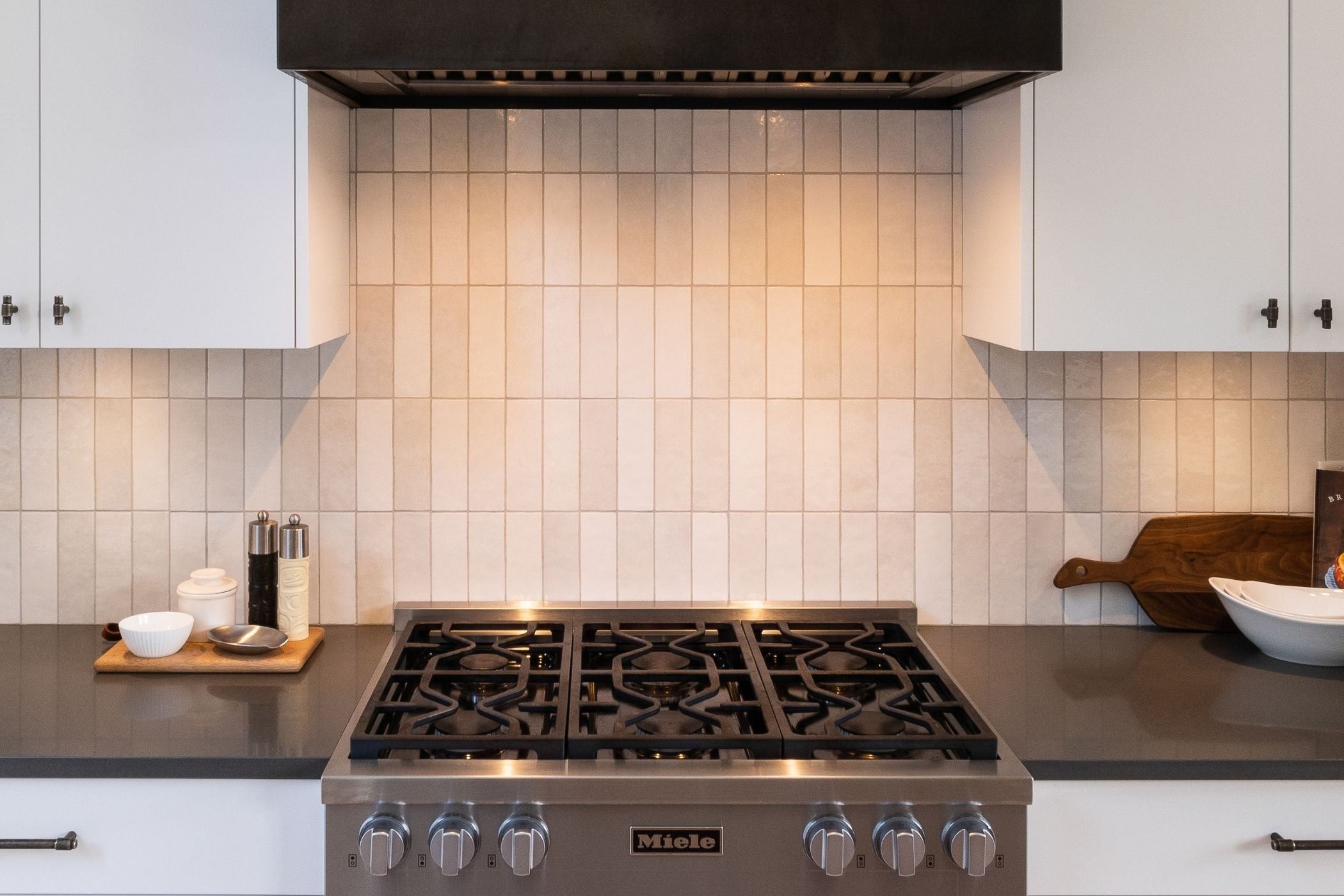
A range is the all-in one cooktop + oven that you find in almost all kitchens. If you have an appliance that slides into a space between your cabinets that has burners on the top and an oven underneath, you have a range.
A stove is a more historic term that has changed meaning over the years. Historically, a stove was considered any kind of enclosed box that burned fuel like wood or coal to provide heat. These days, most people either use it to refer to a range or, more specifically, to the burner part on top of the range.
And a bonus: If you hear “cooktop” specifically it usually refers to a separate cooking surface that doesn’t have an oven below it. More on cooktops and wall oven combos below.
Types of ranges: Freestanding and slide-in
There are two types of ranges: freestanding and slide-in.
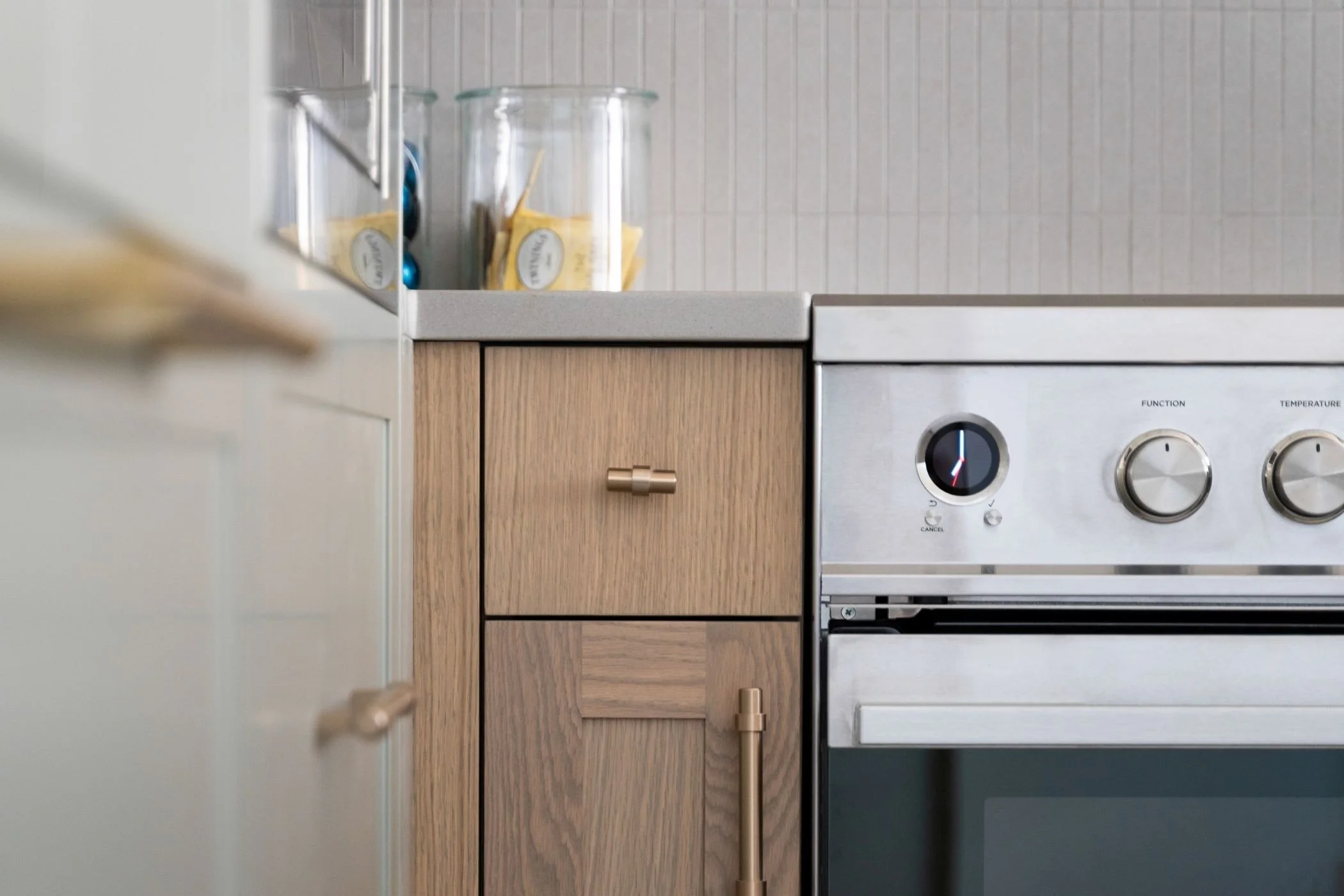
Freestanding ranges are the ones with the knobs and control panel at the front (or sometimes at the back) that you plug in and push into place in the space between your cabinets. If you’re shopping at a standard box store or appliance store, this is probably what you’re buying.
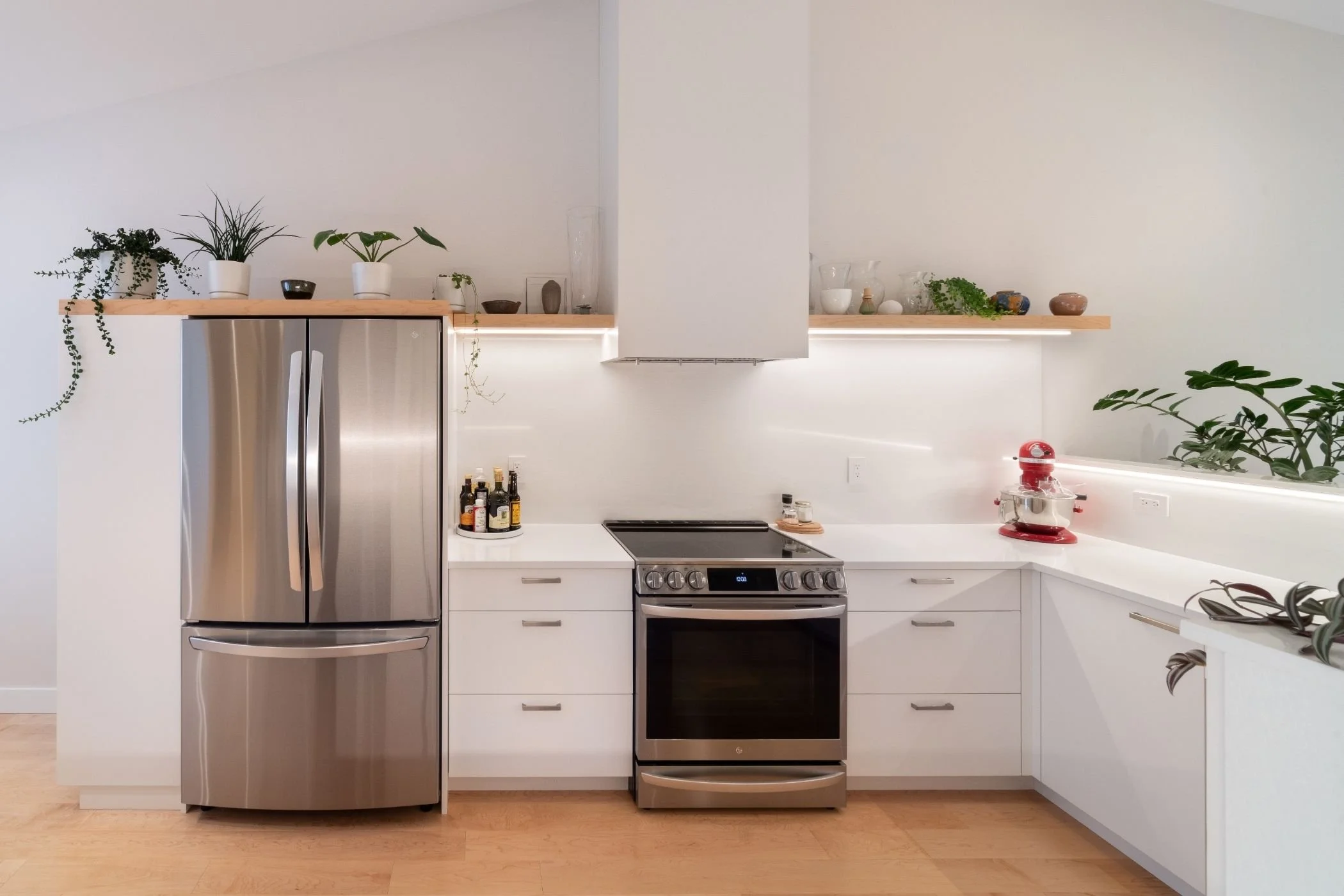
Slide-in ranges are designed to create a more seamless look between the appliance and the cabinets. They always have the control panel at the front or on top — but never at the back. This means that they are installed differently, and may require a strip of matching countertop material (about 1.5 inches) at the back of the appliance to close the gap and make everything look seamless.
Regardless of what type of range you buy, make sure to measure carefully to make sure your chosen appliance will fit the space you have in your kitchen. If you’re replacing a freestanding with a slide-in, this is extra important.
The typical space between your cabinets or countertop is 30 inches across — so this is what most standard kitchen layouts allow for. Double check everything before you purchase!
Powering your range: Gas, electric, induction, dual range
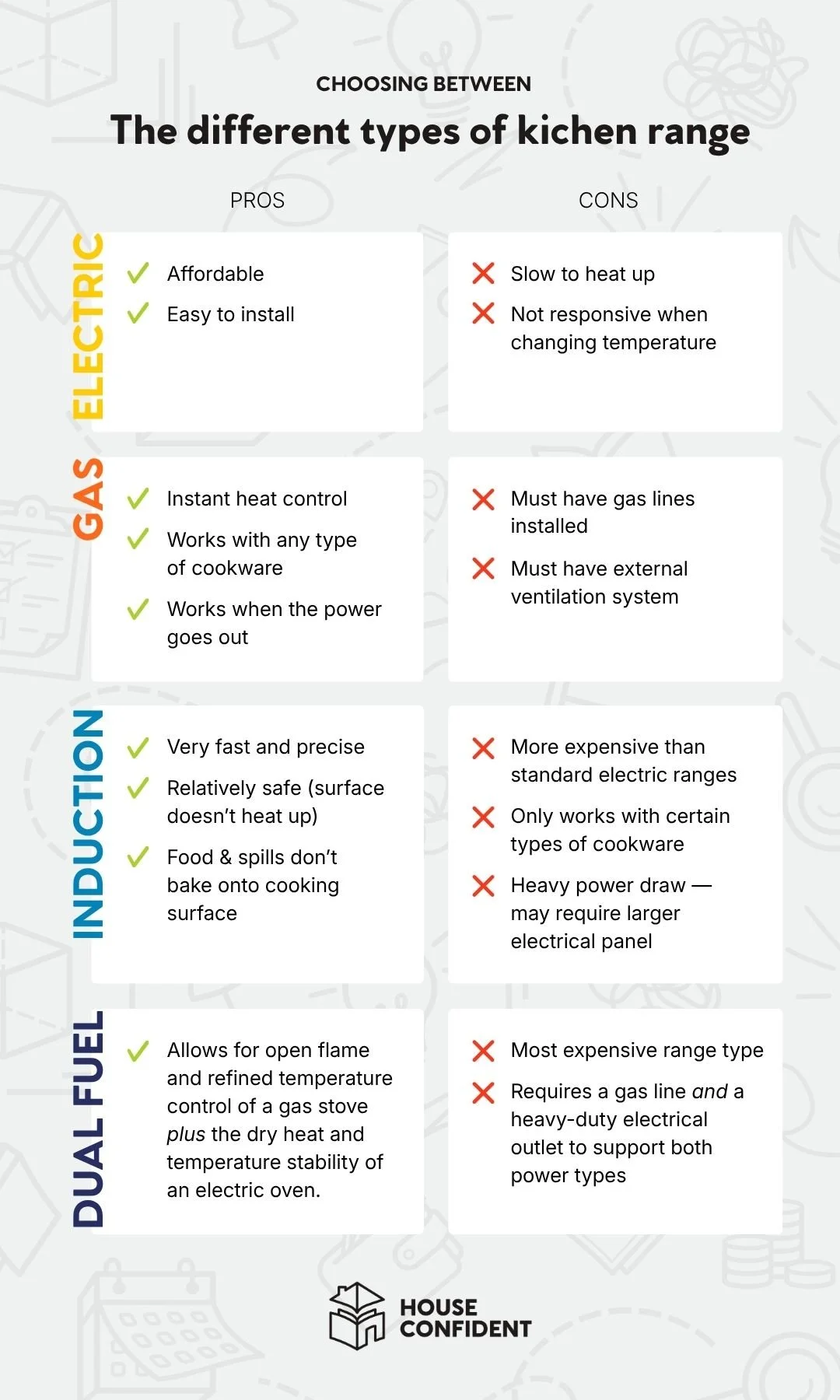
One type of kitchen range isn’t better than the other — there are pros and cons to each. The important thing is to do your research and decide based on what works best for your kitchen.
Choosing your fuel source is the biggest decision you’ll make when it comes to choosing your range. It’s not just about how you like to cook — it’s about what’s running behind the walls, your power lines and electrical supply, and which specialists you’ll need to help with the install.
Electric ranges
Electric ranges are the standard, budget-friendly option you’ll find in most big box or appliance stores. The old ones had coil burners; newer ones are more likely radiant glass with a uniformly smooth cooking surface.
Pros: Not only are they the most affordable choice, they’re also the easiest to install.
Cons: They’re slow to heat up and not responsive when you change the temperature.
Gas ranges
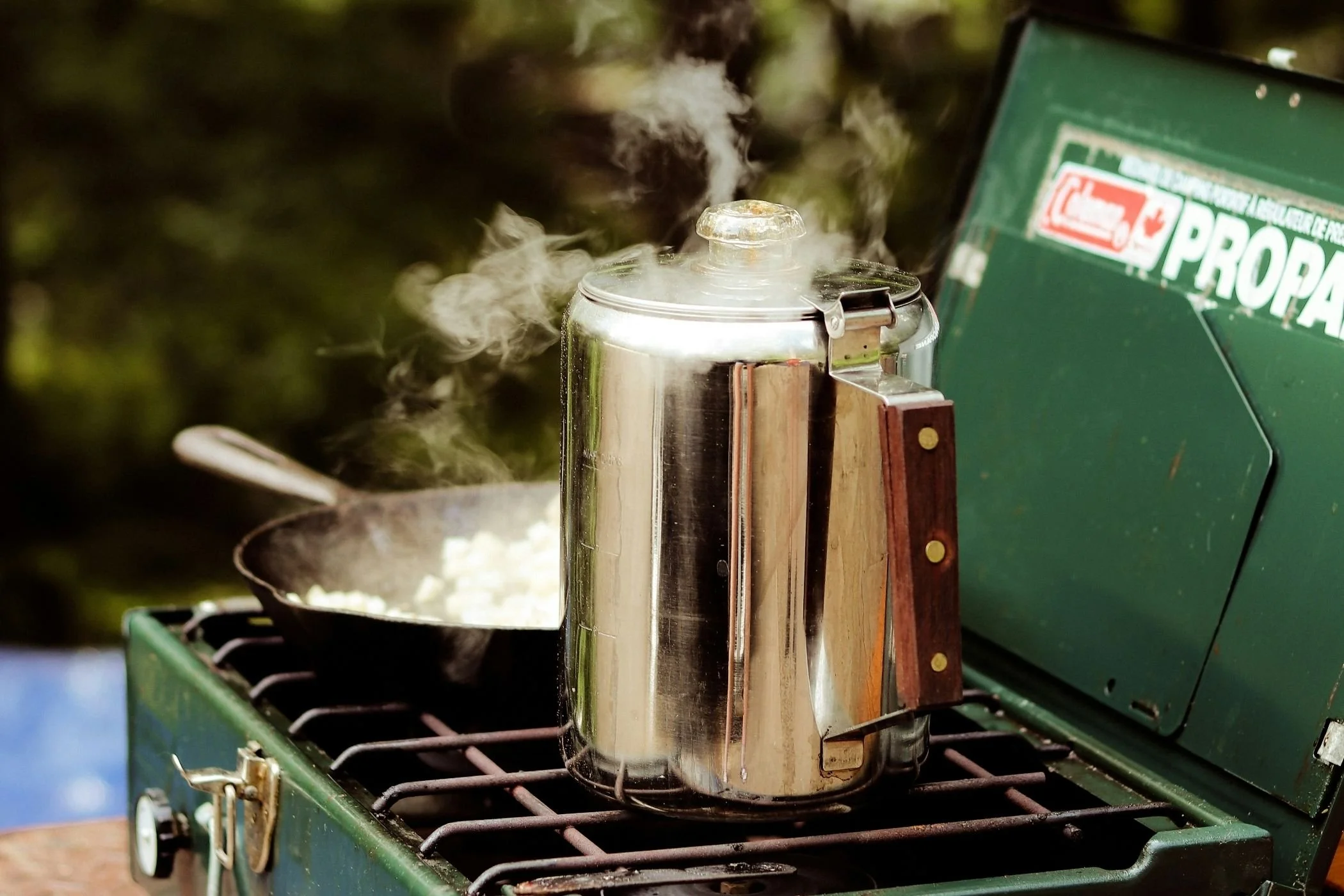
Gas ranges use either natural gas or liquid propane to produce an open flame that you cook over.
Pros: You get instant heat control (adjusting your flame up and down) and they work with any kind of cookware. And if the power goes out, you can usually still light the burner with a match to make dinner.
Cons: They require special infrastructure to work that doesn’t come with a lot of homes. You need to run gas lines to your cooking area (many homes only have an electrical plug), and you need to have an external ventilation system (no recycling hood fans allowed).
Induction
Induction ranges are the newest technology to the scene and quickly growing in popularity. While they look exactly the same as an electric stovetop, they work very differently. Rather than heating up the glass top, they use electromagnetism to bring the charge directly into your pot — essentially turning your cookware into the heating element.
Pros: Homeowners love induction cooktops because of how fast and precise they are. And since the cooking surface itself doesn’t heat up, they’re both relatively safe and easier to clean because spills don’t bake onto the glass.
Cons: Not only are they pricier, but induction ranges only work with magnetic materials like cast iron or stainless steel. If you have copper or aluminum cookware, you’ll likely have to replace it.
The other downside most homeowners don’t know about: Induction ranges draw a lot of power. If you have an older home or a smaller electrical panel, you may be limited in what you can run at once or looking at an expensive panel upgrade. If you’re thinking about an induction range, talk to your electrician and make sure your electrical supply can handle it!
Dual fuel
The luxury option that gives you the best of both worlds, dual fuel ranges combine a gas stovetop with an electric oven.
Pros: Allows for the open flame and refined temperature control of a gas stove plus the even, dry heat and temperature stability of an electric oven.
Cons: The most expensive of your appliance types — and the most complicated to install as you need both a gas line and a heavy-duty electrical outlet to support both power types.
Cooktops and wall ovens
Upgrading to a cooktop and wall oven combination is the dream for some of my clients — and for good reason!
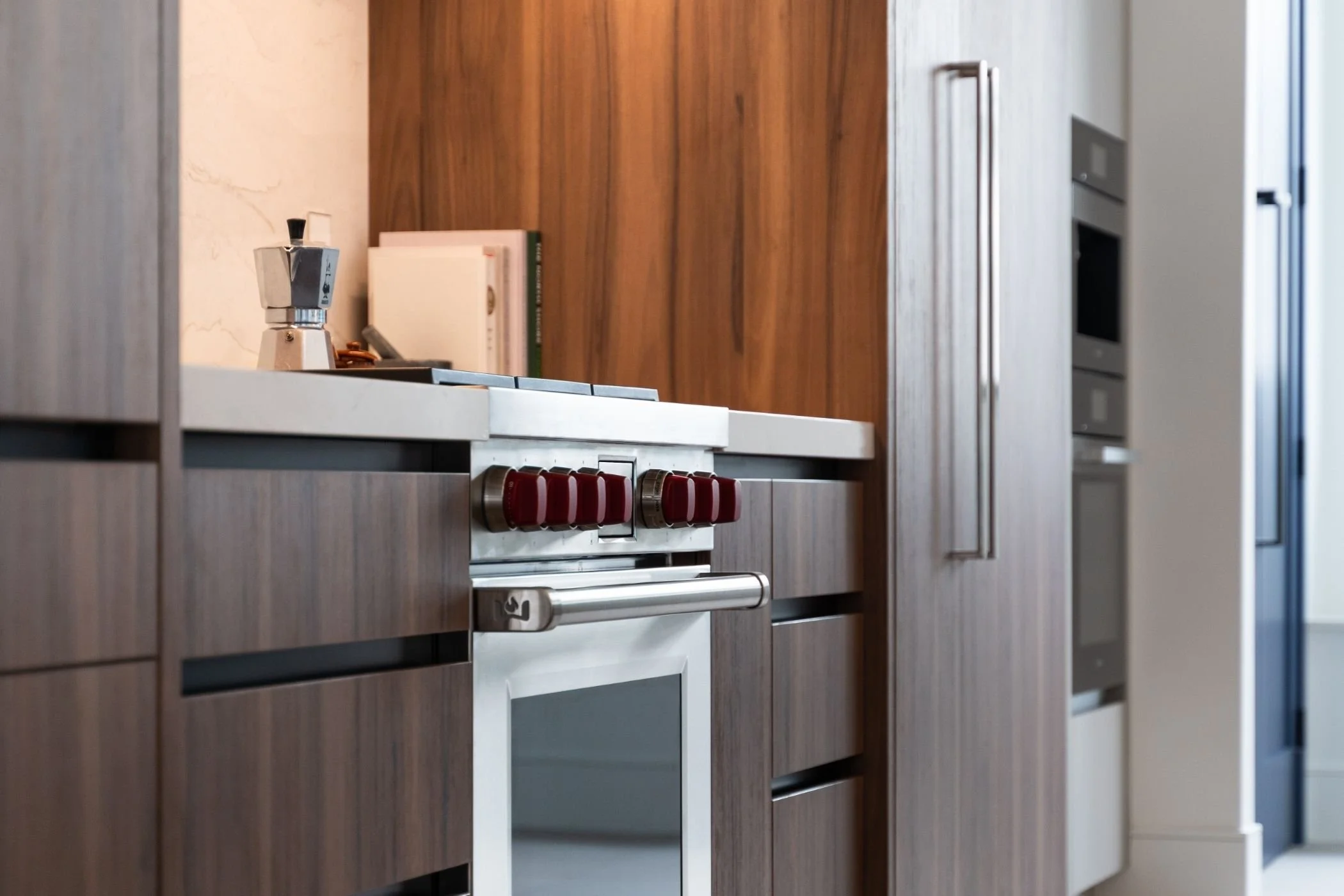
Your oven is up off the ground, which means you’re not bending over to pull things out of the oven. You have more space for pots and pans in the drawers under your cooktop. And you can double stack appliances — two ovens, or a speed oven, steam oven, and microwave combo. There are a lot of choices out there.
That said, switching to a cooktop and wall oven has pretty major ramifications for your kitchen and pretty much always happens in the context of a larger renovation. Here are a few things to watch out for if you’re thinking about making the switch:
Reworking the cabinetry: You’ll need to change everything about your cabinetry to accommodate the change — which basically makes this a renovation. You’ll lose some cabinet space to your wall oven, and while you’ll add a drawer below the cooktop, you’ll lose about the equivalent of the top drawer to make room for the appliance. You’ll also need custom cabinetry designed for the weight of these appliances.
Reworking the infrastructure: Because you’re now running utility hookups to different locations, you’ll need to open up the walls and bring in trades who can reroute your electric, gas, and ventilation systems as needed.
More demanding electrical requirements: Depending on the appliances you choose, but especially if you go with a double oven, you’ll probably need to upgrade your electrical panel. This is very expensive.
Hood fans
The hood fan might be the most forgotten appliance in your kitchen — but it’s incredibly important. Its job is to extract smells and smoke from your home, and without it your kitchen will not function well or safely.
For that reason, choosing the right hood fan matters. Here are a few things to keep in mind:
Ducted vs ductless fans: Ducted fans vent your air to the outside of your building. Ductless ones are usually installed in condos or other spaces that don’t have exterior access — because of this, they pass the air through a charcoal filter before recirculating it into the room. Know which type you have before you buy!
Avoid the hood fans with the microwaves built in. Not only are the fans horribly ineffective, but they have to be installed lower than a standard hood fan to accommodate the microwave, which blocks your line of sight to the back burner.
Newer hood fans often come with larger pipes than the ducting in older homes allow. This is easily remedied with a reduction sleeve or transition piece you can either get at a big box store or from a ducting company. However, you may lose a little CFM (cubic feet per minute) of air movement because the air flow is restricted by the smaller ducting.
Make it a habit to turn your hood fan on before you start cooking. This keeps the air moving in the right direction and helps prevent the smoke alarm from going off. (Not a construction tip, just a kitchen maintenance tip!)
Key takeaways
A new stove can be the easiest appliance swap in your kitchen — or the first domino in a much bigger project. Here's how to keep it on the simple end:
Know your electrical before you shop. This is the big one. Induction ranges and double wall ovens can pull more power than an older panel can handle… and finding that out too late is an expensive way to learn. Talk to your electrician early so you know what your home can actually support.
Measure carefully, and then measure again. Most ranges are 30 inches across, but don't assume. The space you've got dictates what you shop for, not the other way around.
Get clear on the scope first. Swapping a range for another of the same type and size is straightforward. Changing the footprint, the fuel source, or moving to a cooktop and wall oven is a whole other animal — and often a full renovation. Decide which one you're really taking on before you start.
Don't forget the hood fan. It's the most forgotten appliance in the kitchen and one of the most important. Pick one that's quiet but powerful, skip the over-the-range microwave, and get in the habit of turning it on before you start cooking.
The bottom line: a new stove is rarely just a new stove. Spend a little time up front on your space, your power, and what you're actually trying to change, and you'll sidestep the budget surprises and headaches that catch most homeowners off guard.