What to know before buying a new fridge
Before you decide to buy a new fridge, there are a few important decisions you need to make first. What size are you going for? What features do you want? Where will it go?
Each of these decisions might seem simple at first glance, but they have a potential domino effect that can impact your budget and potentially turn your quick appliance change into a bigger headache or even an all-out renovation.
Before you buy, here are the key things you should consider.
Start with the space you've got (or are willing to change)
The first question you need to ask yourself when buying a new fridge isn’t “Which fridge should I buy”. It’s “Am I willing to change my kitchen for it?”
I say this because 90% of the clients who come to me looking for a new fridge also want a bigger fridge… but don’t realize that this means a much bigger project.
If you want a bigger fridge, that means that any cabinets around it will need to move, be modified, or be replaced.
That might not be a problem if you’re already doing this as part of a renovation and plan to redo the kitchen anyways. In that case, go for it!
But if you weren’t planning on a renovation, this is where scope creep makes an appearance and starts to create a set of projects, problems, and expenses you weren’t expecting.
If you don’t want to change your kitchen or take on a renovation project, be sure to measure the space you have and shop accordingly.
That means measuring a few things:
The width, depth, and height of the box you’ll put the fridge in.
Any breathing room you’ll need to allow around the fridge (typically a couple of inches at the back and sides, and a bit more at the top. Be sure to check the manufacturer specs on this!)
The space you’ll need for the door to swing open (keep reading for more details on this)
The three main types of fridges
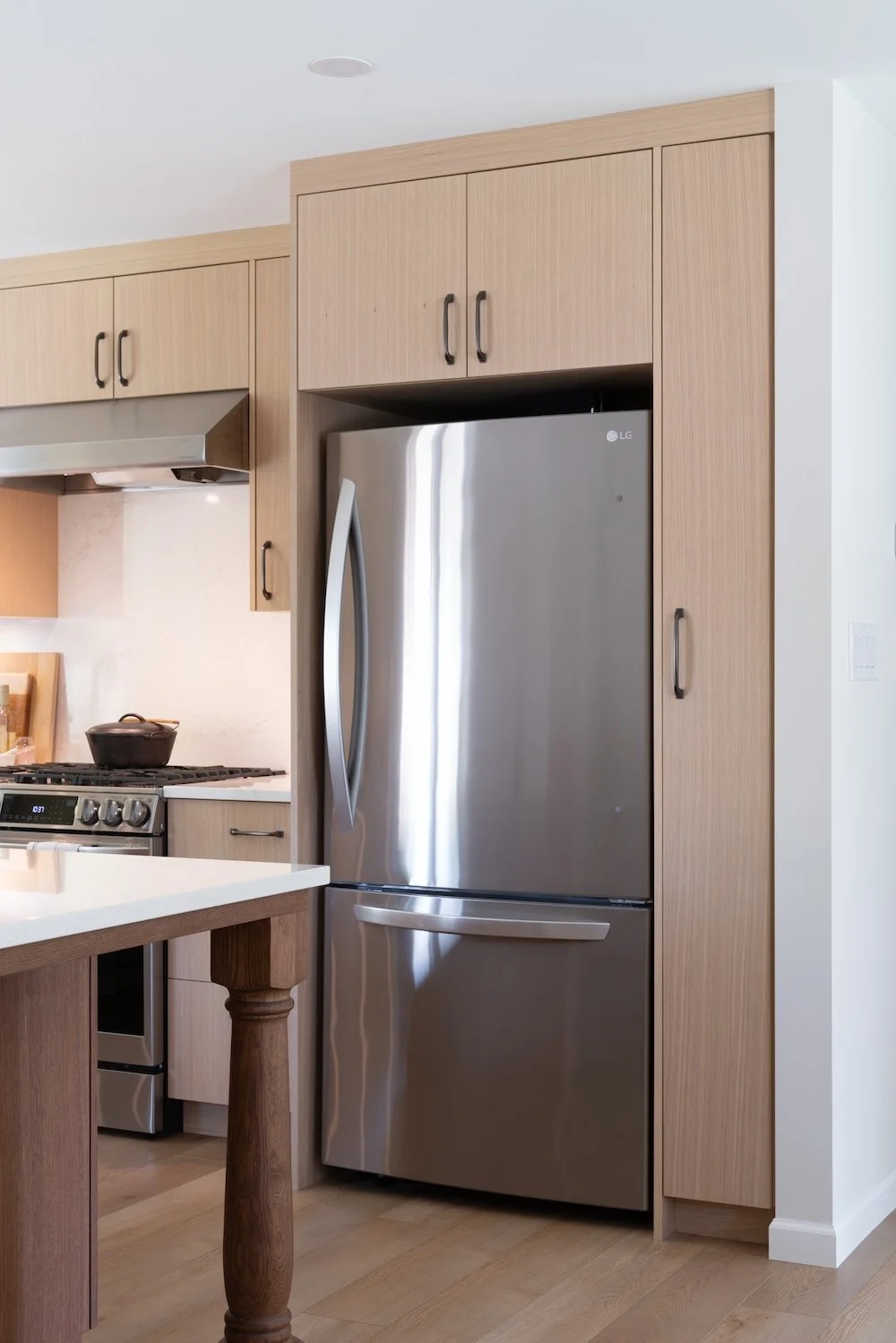
Photo credit: Paul Grdina
There are three main types of fridges to choose from. They’re not totally mutually exclusive (for example, an integrated fridge will be counter-depth, but a counter-depth fridge isn't necessarily integrated). But they are a good place to start in assessing what will work for your budget and space.
Free standing
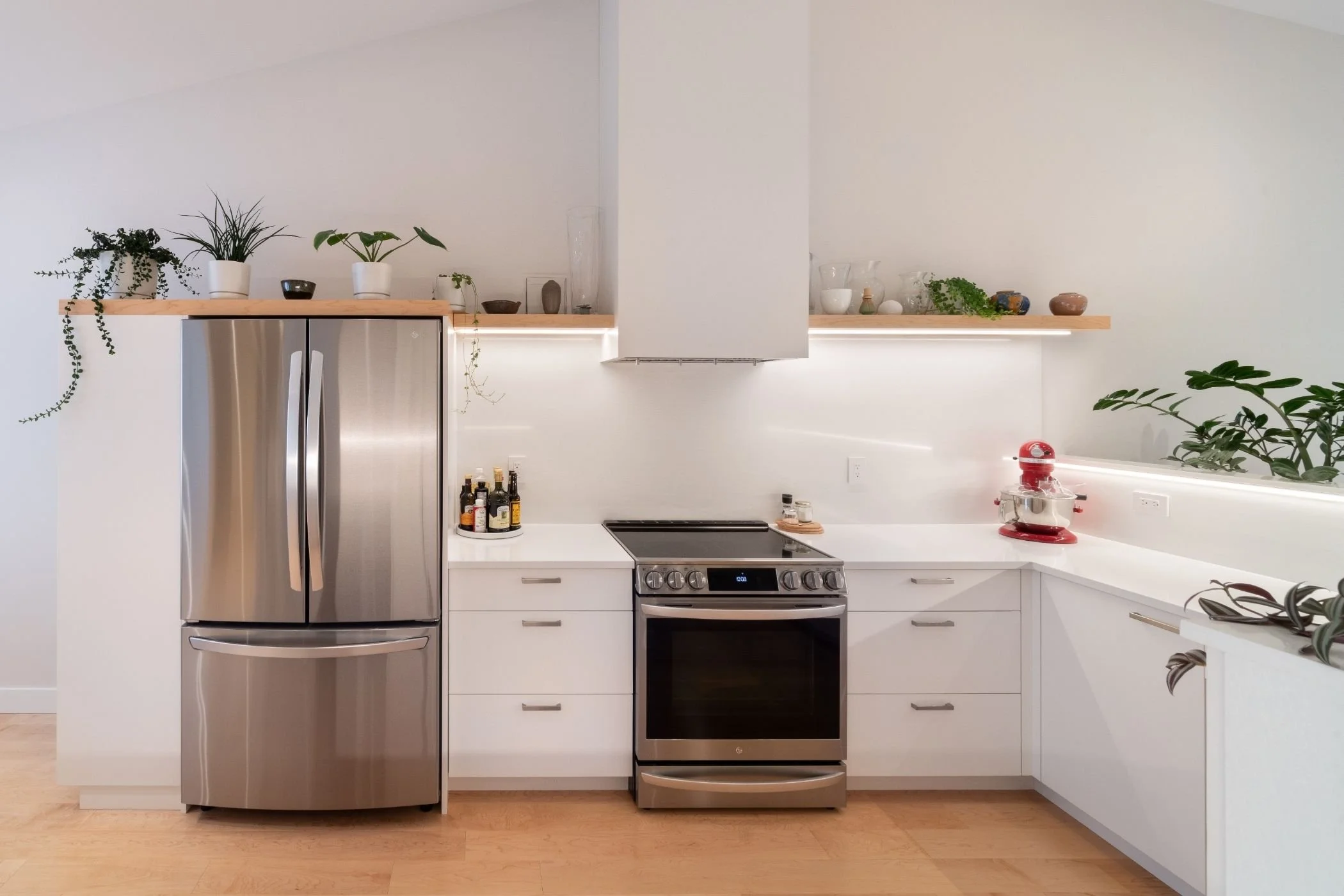
This is the most common choice, and the most affordable one — it’s what you’ll find at a box store or appliance store. Take it out of the box, plug it in, push it into the refrigerator space in the kitchen, and you’re done.
Counter depth
These are still free-standing, but a step up in cost.
They’re designed for the door to sit in line with your counters rather than stick out past them. This creates a more streamlined design in the kitchen and makes the space feel roomier. The trade-off with a narrower depth is that these fridges tend to be taller or wider so that you get the same amount of storage space on the inside.
That means that measuring to make sure this type of fridge will fit in your existing space is essential.
Integrated
These are the most expensive types of fridges. They can either have a stainless steel door or be covered with cabinetry fronts so that it blends seamlessly in with the rest of your design.
Integrated fridges are specialty appliances that are screwed in and fastened into the panels or cabinetry of your space. They must be perfectly level and plumb, and they require a professional to install them and hook them up.
There’s no pulling this kind of fridge out from the cabinets to clean behind the coils every spring. Once it’s in, it’s in.
Doors and water: key features to pay attention to
Any appliance store will have a list of features as long as your arm. There are two that you should put extra thought and attention into: whether there’s a water hook-up connected to the fridge, and how the doors will work.
Water and ice
Water and ice dispensers are appealing features, but they can also be the biggest reason your fridge will cause you problems down the line. This is because they introduce the risk of leaks.
If you know your fridge will have a water dispenser of any kind, make sure you can run plumbing to the fridge — and make sure it’s a single hose with no connection points in between where water can get out and cause damage to your cabinets and floors.
I also advise choosing a fridge with an interior ice maker and water dispenser instead of one on the outside of the door. There are fewer opportunities for accidents from kids and pets, and any messes or leaks are more contained and less likely to damage the surrounding area.
Finally, remember that a tremendous amount of space goes to ice dispensers in the fridge door — you lose a lot of space for storage just to accommodate the ice maker.
French doors vs. single door
When I’m doing the space design for a kitchen renovation, the fridge is always the second appliance to be placed (after the sink). This is because the way the doors on the fridge work dramatically change how the space functions overall.
French doors look great, but they cut off your landing space (the place where you move things into and out of the fridge) on both sides. Either you need counter space behind you, like an island, or you need to back up and go around the door to find a spot to put things down.
Single doors give you more options for a landing space, but they have a wider radius. This means that they swing out further into your walking area and may feel like they take up more space.
One is not necessarily better than the other. It all comes down to your unique space and how you work in your kitchen.
How the door hinges and opens
Many homeowners forget that when a fridge door opens, it sticks out past the body of the fridge. If it's positioned against a wall or tight to cabinets, it may not open far enough to pull the crisper drawer out all the way.
As you’re measuring your space, make sure you’re accounting for the direction the door will swing and how much space it needs on the side to be fully functional.
A note on under-counter “built in” fridges
If you’re considering one of those under-counter wine or beverage fridges, this is for you. Many of these appliances are labelled as “built-in” — but that’s not the same as the truly integrated fridges I was talking about earlier.
The difference is in how they handle air flow:
Most fridges (including the standard “built-in” fridges you’ll see at a box store) require you to leave room around the top, sides, and back of the fridge. If you put this type of fridge into a space that doesn’t have enough air flow, you’ll burn out the compressor and break the appliance.
Integrated appliances are engineered for the air flow to work differently, which is what allows them to be fully enclosed. It’s also what makes them much more expensive.
Moral of the story: Manufacturer specs aren’t suggestions. The term “built-in” gets used loosely in the appliance space, and a true built-in costs more for a reason.
If you’re expecting to be able to slide an under-counter fridge into a given space, plug it in, and call it a day, be very sure you’ve checked the specifications very carefully before you move ahead.
Key takeaways
A new fridge can be one of the simplest appliance changes you'll make — or it can quickly turn into something much bigger. Here's how to make sure it doesn't get away from you:
Decide on the scope before you start shopping. Are you working with the space you've got, or are you open to changing your kitchen? Get clear on this first, because everything else flows from it.
Measure carefully, and don't forget breathing room. Width, depth, height, door swing, and the manufacturer-required air space around the appliance — all of it matters.
Watch out for the features that come with trade-offs. Water and ice introduce leak risk. French doors cost you landing space. In-door dispensers eat into your freezer storage. None of these are deal-breakers, but go in with your eyes open.
Read the fine print on "built-in." A truly integrated fridge is in a different category from a standard under-counter appliance, and the specs reflect that. Confirm what's required before you commit.
The bottom line: a fridge purchase is rarely just a fridge purchase. The more thinking you do upfront, the less likely you are to end up with a kitchen that's harder to work in — or a renovation you weren't planning for.