The homeowner’s ultimate guide to kitchen renovation design
Design and layout is THE single most important consideration in a kitchen renovation. How you choose to lay out your kitchen is directly responsible for how useful and enjoyable it will make living in your home for many years to come.
On top of that, the decisions you make around your kitchen’s design and layout have the biggest impact on the renovation process itself. The more complex your reno, or the more you want to change, the longer and more expensive it will be.
As with everything involved in construction, the more research and planning you can do in advance, the more prepared you’ll be once the hammers start swinging.
So in this post, let’s talk about what I wish every homeowner knew about kitchen design. After 40 years of designing and building custom kitchens, this is the advice I repeat to my clients on literally every kitchen we build.
We’ll cover the most important principle first — designing for your lifestyle vs. what looks good on social media. We’ll also talk about some of the practical guidelines you should know around work zones, space, and appliance placement. And I’ll share my take on the latest kitchen storage trends: which are worth considering and which ones to ignore.
This is part of a series on kitchen renovation guides for homeowners:
Design for function first
For most of my clients, the kitchen is the most important room in the entire house. It’s more than just a space to prepare food. It’s a gathering place, an entertaining space, the spot where your kids do homework or you connect with your spouse after a long day.
Making sure your kitchen is designed to support how you actually live now and into the future is Job #1 in your kitchen renovation.
Depending on your lifestyle and priorities, it needs to accommodate any combination of chaotic breakfasts, rushed dinners, lazy Saturday mornings, raucous dinner parties, Christmas cookie baking extravaganzas, and the ever-present mess of kids and pets.
Unfortunately, this is where social media isn’t doing most homeowners any favours.
We get so preoccupied with the trends we see on Instagram, Pinterest, or home magazines that we forget a few really important things:
Most of these pictures are of insanely expensive projects that would explode your head if you saw the actual budget
Many of these projects are designed as architectural statement pieces — they look good, but they’re not livable
None of these projects are designed for your home, your budget, or your life
And while the aesthetics of your kitchen design do matter, kitchen layouts are where you really should be spending your time. People spend months obsessing over cabinet colors and countertop materials, but ultimately, the functionality will determine whether you actually enjoy using your kitchen day after day.
Here's the truth: if you spend five times more effort on how your kitchen will function than on how it will look, you'll end up with a much better space.
Go ahead and use those inspiration boards to help you choose a direction and figure out what you like. But don't let them be the deciding factor when it comes to your kitchen design.
Instead, ask yourself questions like:
What in your kitchen do you love?
What do you not like and want to change or have fixed?
Are you planning to upgrade or add appliances? New appliances often mean layout changes — a new range might require different electrical, and French doors on your fridge or oven change your space clearances and landing zones
For any hot design trends that you love, will you still love it in 5 or 10 years?
I wrote an entire post on the design rule I follow with every project here. It’ll help you think through your priorities and how your design can support your daily life in more detail.
Getting professional help with your kitchen design
While I’ll do my best in the rest of this article to share the general rules of thumb you should be thinking about, you may be thinking about hiring someone to help you design your kitchen specifically.
Honestly, this is probably a good idea! The kitchen is the most expensive room in your house, and the layout decisions you make will affect your daily life for the next 10-20 years. It's important to get this right.
If you do decide to hire someone, be sure to look for a kitchen specialist, not necessarily an interior designer.
This matters because your specific configuration, appliances, and lifestyle might dictate something specific that you haven't thought of. This is where working with someone who specializes in kitchen design can save you time, money, and a lot of frustration.
If you’re in Canada, look for someone accredited or affiliated with the NKBA (National Kitchen and Bath Association). They have specific training on the functional aspects of kitchen and bathroom design, not just aesthetics.
If you’re elsewhere in the world, research similar associations in your area and look for companies or designers who are associated with them and share their values or training.
And if you’d like my eyes on your kitchen, I’m happy to help! Reach out anytime to book a consult.
That said, let’s talk about the general principles that apply to kitchen design. Here are the fundamental layout principles every homeowner should understand.
The new kitchen triangle: Design your kitchen around these 5 essential zones
What is the kitchen work triangle?
You may have heard of the “kitchen work triangle” in kitchen design. It’s a theory that was developed in the 1920s and 1930s to make moving around the kitchen as efficient as possible.
The idea was to keep the primary work zones — sink, stove, refrigerator — close together so that you limited the number of steps you had to take as you moved between these zones.
Laying those zones out in a triangle shape was seen as the easiest and most efficient use of space, particularly in the smaller kitchens of the pre-and post-war years where galleys, L-shapes, and U-shapes were the most common layouts.
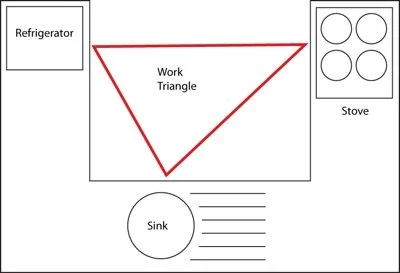
The standard “kitchen work triangle”. Image source: Wikipedia
The evolution of the modern kitchen
But a lot has changed in the way we use our kitchens since then.
Kitchens aren’t the domain of a single cook. Couples cook together, kids hang out at the island or table, and guests congregate in the kitchen during parties.
Our kitchens are bigger, and islands are common.
We also have more appliances, storage, and stuff to account for.
As the way we use the kitchen has changed, the idea of the kitchen triangle has evolved, too.
The 5 essential work zones for modern kitchens
Rather than the classic stove + sink + fridge combo of the kitchen triangle, today we design kitchens for these five areas:
Zone 1: Cold food storage (refrigerator area)
This is your main fridge and freezer, though it might also include a smaller drinks fridge or additional freezer space.
Layout considerations for this zone:
Consider having at least 15 inches of landing space on the “handle side” of the fridge to allow for easy loading and unloading
Be sure to account for which way your door swings and the overall flow of traffic.
Think about your workflow from the fridge to your food prep zone (zone 3) — you’ll probably want to have these close by
Think about how many people might need to access the fridge simultaneously. What will the traffic flow be like?
Zone 2: Pantry storage (non-refrigerated items)
This is where you’ll store any dry goods, canned items, and possibly also smaller appliances.
Layout considerations for this zone:
Aim for easy access from prep area (zone 3)
Organizational systems and adjustable shelving are key here. What works best for how you prefer to cook and store your food?
If you’re installing roll-out shelves and things that pull into your walkway, keep in mind how that will impact traffic
Zone 3: Food preparation
This zone is all about counter space and allowing enough space for your bowls, cutting boards, and ingredients as you work.
Layout considerations for this zone:
Give yourself easy access to storage for knives, cutting boards, and mixing bowls
Commonly placed near the sink (zone 5) for tasks like washing produce or draining food
Good overhead lighting matters here!
Zone 4: Cooking
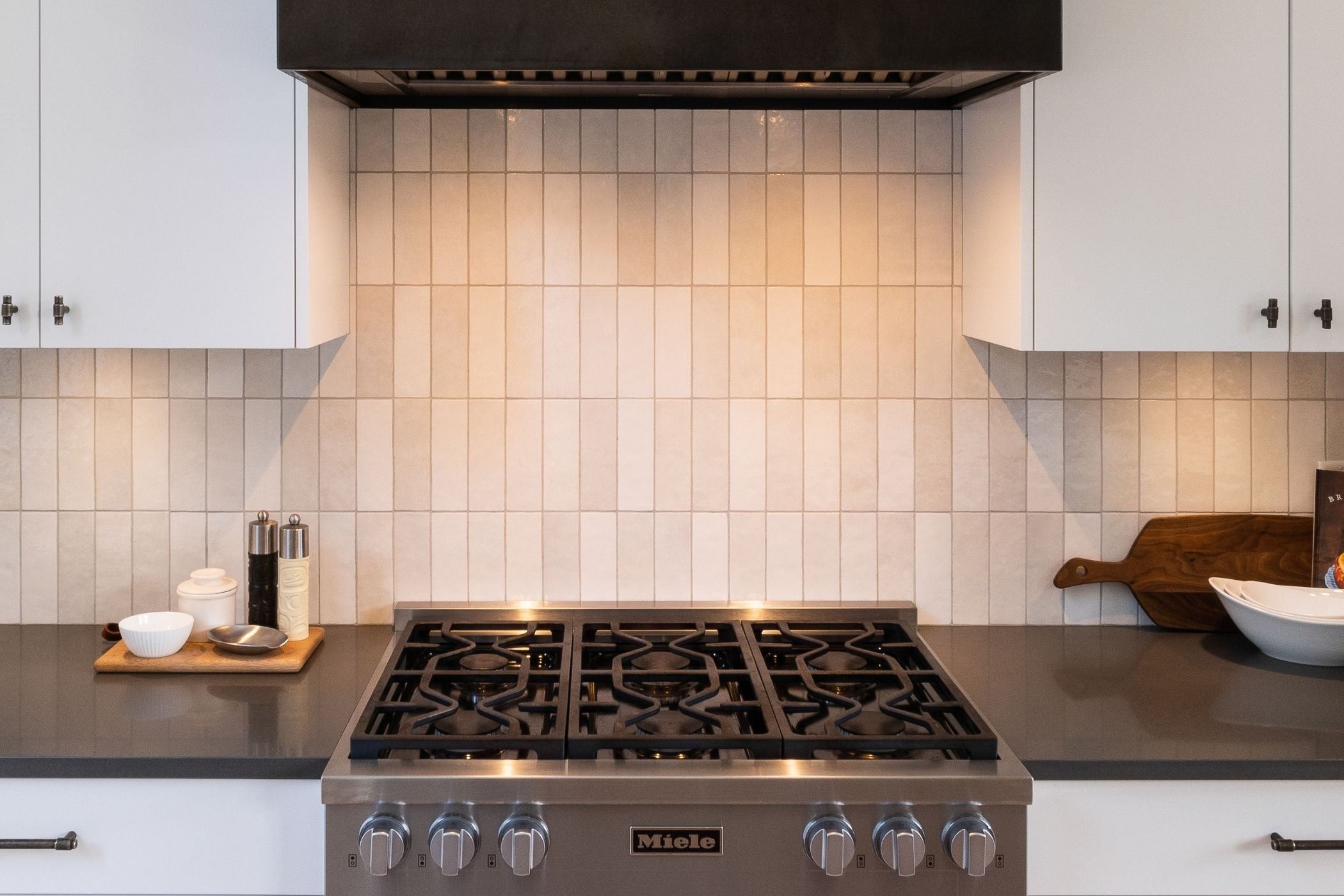
This area includes your range, cooktop, and/or wall ovens if you have them, as well as any landing space you’ll need for hot pots and pans.
Layout considerations for this zone:
Try to create landing space on both sides for hot cookware — ideally with heat-resistant surfaces close by
Try to design for easy access to pot storage and cooking utensils
Be sure to include proper ventilation and hood placement in your design. This means thinking through where your ducting runs and the size of your ducts, as moving or adjusting these can be a big expense
Zone 5: Cleanup zone
This zone is centered around your sink, dishwasher, and the various systems associated with kitchen cleanup.
Layout considerations for this zone:
Ideal placement for your dishwasher is close to the sink for rinsing and loading
Don’t forget space for air drying any dishes that won’t go through the dishwasher
Consider storing your dishes close to the dishwasher to make unloading easy and efficient
Also consider putting your plates, bowls, and glasses in a drawer for easier access
Think through your trash, recycling, and/or composting needs — where will you put these containers?
Think through where you’ll put your cleaning supplies: kitchen towels, cloths, spray, dishwasher detergent, brushes, etc.
General guidelines for kitchen zone layout
For each of these zones, you should aim to have everything you need for that job contained in that area. This lets multiple people work simultaneously, reduces traffic overlap, and keeps things moving efficiently.
You should also aim to have associated zones close together, so that you can move easily from one to the other. For example, having your prep space near to your stove makes it easy to add chopped vegetables to a pot of soup or slide a roasting tray into the oven.
As you think about where each appliance should go, be sure to also include a landing and/or storage zone for each space that will give you room to work. This is about efficiency, but also safety: having space to put your stuff prevents potentially dangerous spills and accidents. For example:
Stove: Pots & pans — both storage and hot pans coming off the stove or oven
Fridge: loading and unloading food
Dishwasher: store your dishes close to the dishwasher for easy unloading
Kitchen floor space guidelines
Another huge design consideration in your kitchen is allowing for enough floor space to make moving through your kitchen as easy as possible.
Older kitchens were designed with 3 feet between countertops. This is fine for single-user kitchens but makes for constant “excuse me” moments if two or more people are in the space at the same time.
The modern spacing recommendations for a kitchen is to allow for 42-48 inches between counters, with 48 inches being ideal.
These guidelines are much better for the flow of traffic — an important safety consideration when you’re moving hot dishes from one zone to another! They also leave enough room for someone to walk by when an appliance door is open. Kitchen floor space guidelines
Another huge design consideration in your kitchen is allowing for enough floor space to make moving through your kitchen as easy as possible.
Older kitchens were designed with 3 feet between countertops. This is fine for single-user kitchens but makes for constant “excuse me” moments if two or more people are in the space at the same time.
The modern spacing recommendations for a kitchen is to allow for 42-48 inches between counters, with 48 inches being ideal.
These guidelines are much better for the flow of traffic — an important safety consideration when you’re moving hot dishes from one zone to another! They also leave enough room for someone to walk by when an appliance door is open.
Popular kitchen storage trends: A reality check
As our kitchens have grown and come to include more storage space, I’ve seen a few major trends consistently challenge homeowners in their renovations. Some are genuinely useful, but many of these trends are driven by looks over functionality… which means a design reality check is in order.
I wanted to mention the most common ones here with my verdict on what actually makes sense for most homeowners.
But keep in mind that, as with most trends, it’s rarely a question of “absolutely yes” or “absolutely no”. It’s a matter of what will work with your priorities, make the best use of your budget, and be practical and functional in your day-to-day use of your kitchen.
Floor to ceiling storage
In Canada in general, there’s a huge emphasis on tall ceilings and cabinets filling your space.
These are beautiful and do indeed offer increased storage… but they also mean you have to be able to reach it! If you have a ceiling taller than eight feet, you’ll need a proper ladder to access everything — a step stool won’t cut it. So now you need to make sure your design allows for storage of a six foot ladder.
There’s also the cost implications. Filling the space vertically is expensive. This is partly because of the additional materials, but also because of the fine detail and added labour required to make everything fit seamlessly.
In my experience with projects like this, it’s not uncommon for clients to spend a disproportionate amount of their entire kitchen budget (relative to the value they get) on filling the space with cabinetry. For the amount of money you’ll save on not filling the space, you can pay a professional cleaner to come and dust the tops of your cabinets (and clean your whole kitchen!) for the foreseeable future.
THE VERDICT:
❌ Not worth it. Better to spend your budget on accessible, functional storage you’ll actually use every day.
Drawer storage
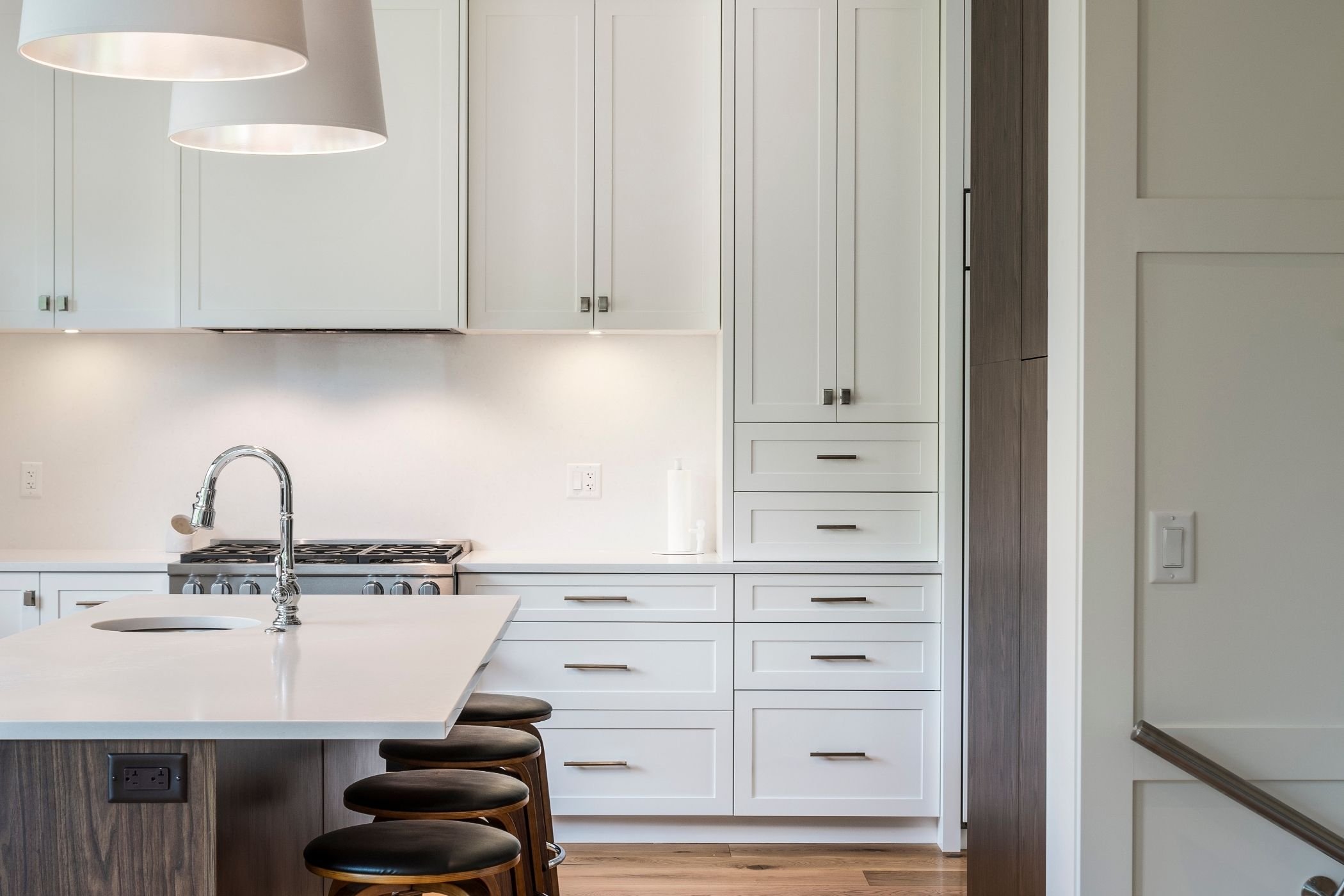
There's also been a major shift towards drawer storage instead of reaching into deep cabinets — and it's about time! This isn't just a trend. It's a practical necessity that makes kitchens work better for everyone.
Drawers have a lot more organization potential and allow you to much more easily see everything at once. They’re also much more accessible, whether you’re designing for little kids or adults with limited reach or range of motion.
Drawers are a great choice for:
Base cabinets for pots, pans, dishes
Spice storage and small items
Utensil organization
Food storage containers
THE VERDICT:
✅ Worth it. Easy to organize, accessible, and workflow friendly — this will make your kitchen life easier.
Open shelving
Open shelving — usually with artistic live-edge wood — is a big feature in kitchens these days. They create a sense of openness, look clean and modern, and can be less expensive than upper cabinets (more on that in a second).
But.
While they definitely make a statement, from a daily use perspective they’re really not practical, for a few reasons:
Structurally they’re tricky. You need to make sure they can support the weight of piles of heavy dishes
They cost more than you might think, and need more planning too. Even simple shelving needs to be anchored properly to the wall with hidden brackets that need to be installed before the drywall goes on. Open shelving is not a quick or cheap fix!
Their finish often gets compromised from sliding items on and off
Keeping them — and everything on them — clean is a pain. It’s not just the dusting, but also the cooking grease that tends to accumulate on kitchen surfaces
THE VERDICT:
❓ Meh. It’s hot now, but is the payoff worth it? They’re a pain to maintain and not as flexible as standard cabinetry. My two cents: go with open fronts if you want a display.
Key takeaways
You can have the most beautiful kitchen in the world, but if the layout doesn't work for your life, you'll be frustrated every single day. The biggest mistake I see homeowners make is getting caught up in how their kitchen will look instead of thinking through how it will actually function.
Here's what actually works when you're planning your kitchen design:
Design for your real life, not your Instagram feed. Think about who uses your kitchen, when they use it, and what they're actually doing in there. Your kitchen needs to work for Tuesday night dinner chaos, not just Sunday morning coffee photos.
Use the 5-zone approach instead of the old kitchen triangle. Cold storage, pantry storage, prep, cooking, and cleanup — make sure each zone has everything it needs and they're positioned to work together efficiently.
Give yourself enough space to breathe. 48 inches between counters is ideal. You'll thank yourself every time two people need to work in the kitchen at once.
Practical > trendy. Floor-to-ceiling cabinets and open shelving look great online, but ask yourself if you'll actually use that storage or want to dust those shelves every week. Drawer storage, on the other hand, is a practical choice that will serve you well long term.
Plan your landing zones. Every appliance needs adjacent counter space. This isn't just about convenience — it's about safety when you're moving hot pots and heavy grocery bags.
Kitchen design is about creating a space that makes your daily life easier, not harder. Get the layout right, and even basic finishes will be enjoyable because everything just works. Get it wrong, and no amount of beautiful tile will fix the frustration of a kitchen that gets in your way every day.
Design is only one part of your kitchen reno! Next up: learn about budgeting for your kitchen renovation and planning a realistic renovation timeline.